
Written By: Julianne Ho
If you’re new to Bridges, you may have stumbled upon our various programming on the website (Mosaic Circle, Competing in Goodness, Dine and Dish) and thought our only mission is to build bridges among faith communities. You wouldn’t be wrong. As an interfaith organization that recognizes the divides existing between faith communities, our mission is to help people create connections they may not have created on their own.
In short, we help our neighbors become better neighbors.

You may have also noticed some of our webpages regarding advocacy and community building, such as our Handle With Care toolkit or our 89th Lege Tracker during the previous legislative session. It might seem odd that an interfaith organization dedicated to building bridges is also working in these spaces with public administrators and legislators, but really, what these programs demonstrate are our shared unspoken questions that drive our decisions:
After building these connections between faith communities, what’s next?
How do we sustain these relationships long-term?
These questions are where my work resides.

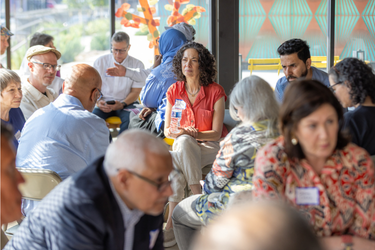
As the policy analyst, you may have met me during the 89th state legislative session for property insurance or during a webinar about a community-based initiative for youth mental health. Much more recently, you may have seen ads in our newsletter advertising for the Faith and Future Focus Group, where we were asking clergy to share their thoughts about what’s affecting their congregations and what priorities they have for the 90th state legislative session. The work my team and I do is how Bridges identifies “what’s next” and how we sustain these relationships: by finding issues our faith communities have in common and exploring ways to relieve them through community-based or legislative means.
As a result, my work often bleeds into politics; a scary, often sore subject for our congregations, as mentioned by many in our focus group. There is a fear that exists within congregations about discussing politics; fear of losing community, a safe space, or confronting a worldview that differs or even opposes everything they know. This fear has led to division within congregations, prejudice and discrimination towards other faith groups, and even violence. I think of Muslim communities who were framed as terrorists after 9/11, Jewish communities facing a rising rate of violence in tandem with antisemitism in recent years, and Christian communities pitting sects and branches against each other, dueling to see who is a “true Christian.”
This fear is not new; it’s rooted in history, centuries before this country was even conceptualized. It’s easy to fall into fear when it’s familiar. It’s easy to hate when we are guided by fear.
But now we’re here, doing our best to coexist, and there is no denying that faith guides our beliefs and view of the world, what is, and what should be. Politics falls into this space as legislators and public administrators try to build a world that reflects what their constituents believe is and what should be. While we may differ in belief systems, while centuries of history cannot be overlooked or erased, it’s important to remember there are still ideas we agree on. That no one deserves to go hungry. That children deserve to be loved and cared for. And that, in response to pain, we must work to ease suffering.
It takes fear to hate. It takes courage to love.


